


Asian Heart Society: The Promoter of Heart Health in Asia
I. Establishment Background and Historical Mission
As the most populous and geographically extensive continent in the world, Asia comprises 48 countries with a population exceeding 4.7 billion, collectively facing severe challenges posed by cardiovascular diseases. Driven by rapid socioeconomic development and demographic transition, lifestyle-related changes have led to a continuous rise in the incidence and mortality of cardiovascular diseases, which have become the primary threat to the health of Asian populations and imposed a heavy social and economic burden.
The establishment of the Asian Heart Society (AHS) marks a significant milestone in the development of cardiovascular medicine in Asia. To address the escalating burden of cardiovascular diseases, AHS initiated preparatory work in 2019, actively conducting in-depth communication and cooperation with cardiovascular societies across Asian countries. In 2020, the highly influential Great Wall International Congress of Cardiology (GW-ICC) officially became the annual academic congress of AHS, signifying a crucial step in integrating academic platforms for cardiovascular care in Asia. After three years of solid groundwork, AHS was officially registered and established in Macao, China, in October 2022.
As a pivotal platform in the Asian cardiovascular field, AHS effectively integrates regional resources and aligns academic efforts. It is dedicated to leading academic advancement, standardizing clinical practice, promoting scientific innovation, and strengthening regional collaboration. AHS aims to systematically enhance the overall prevention and treatment levels of cardiovascular diseases across Asia, tangibly improving the quality of life and health outcomes for hundreds of millions of cardiovascular disease patients.
Currently, AHS has evolved into an authoritative academic organization uniting cardiovascular societies from over 30 Asian countries. It has established a regularized activity system centered around its annual academic congress and featuring multidisciplinary collaboration. Through sustained systematic academic exchanges, professional training, and research cooperation, AHS plays an increasingly vital leading and driving role in the field of cardiovascular disease prevention and treatment in Asia.
II. Governance System and Leadership
AHS has established a modern, international governance structure comprising a Council, a Board of Supervisors, and Professional Committees. Its leadership consists of authoritative scholars and leading figures in the cardiovascular field from various Asian countries, fully reflecting the Society's broad representation and professional authority.
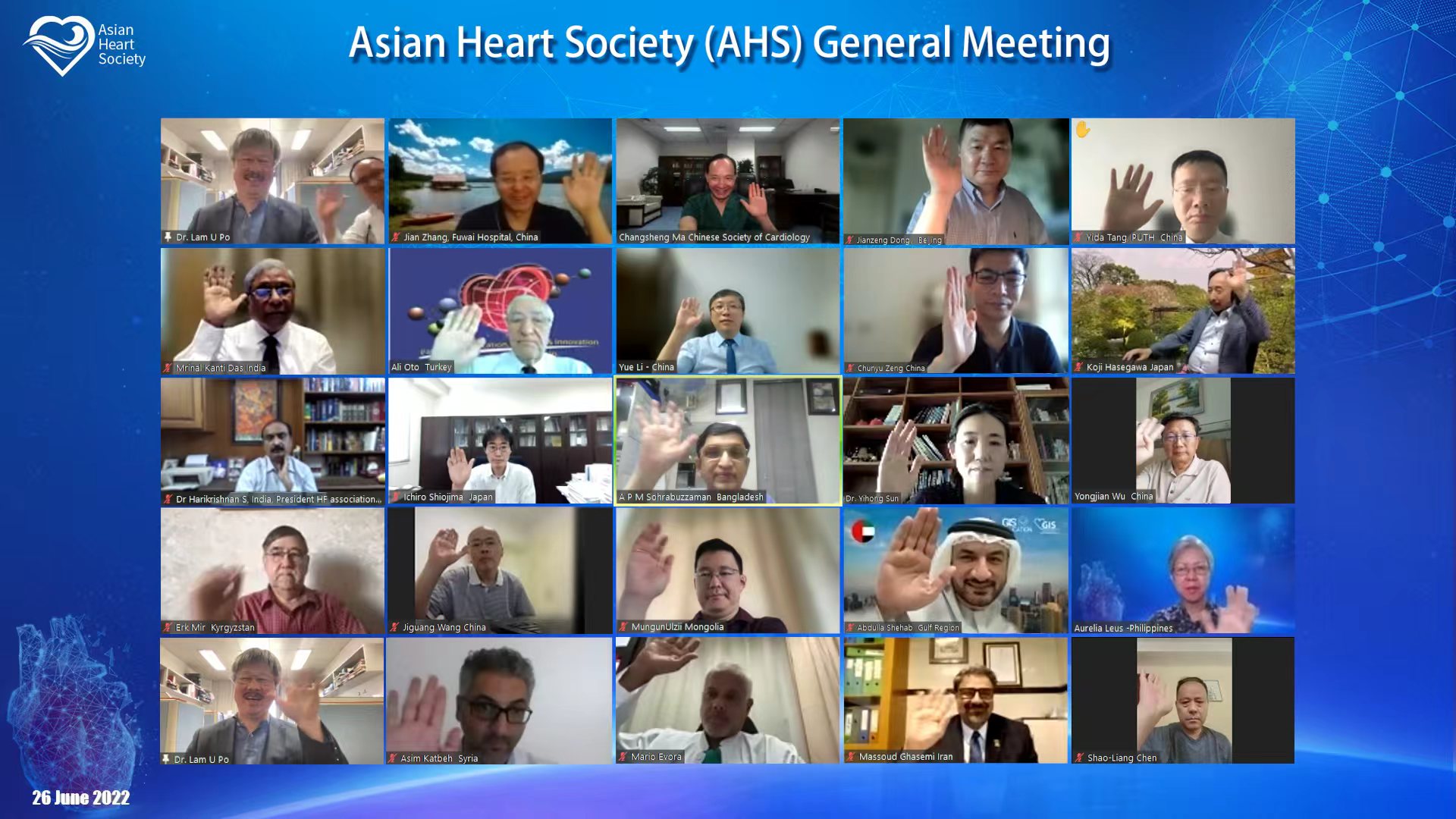
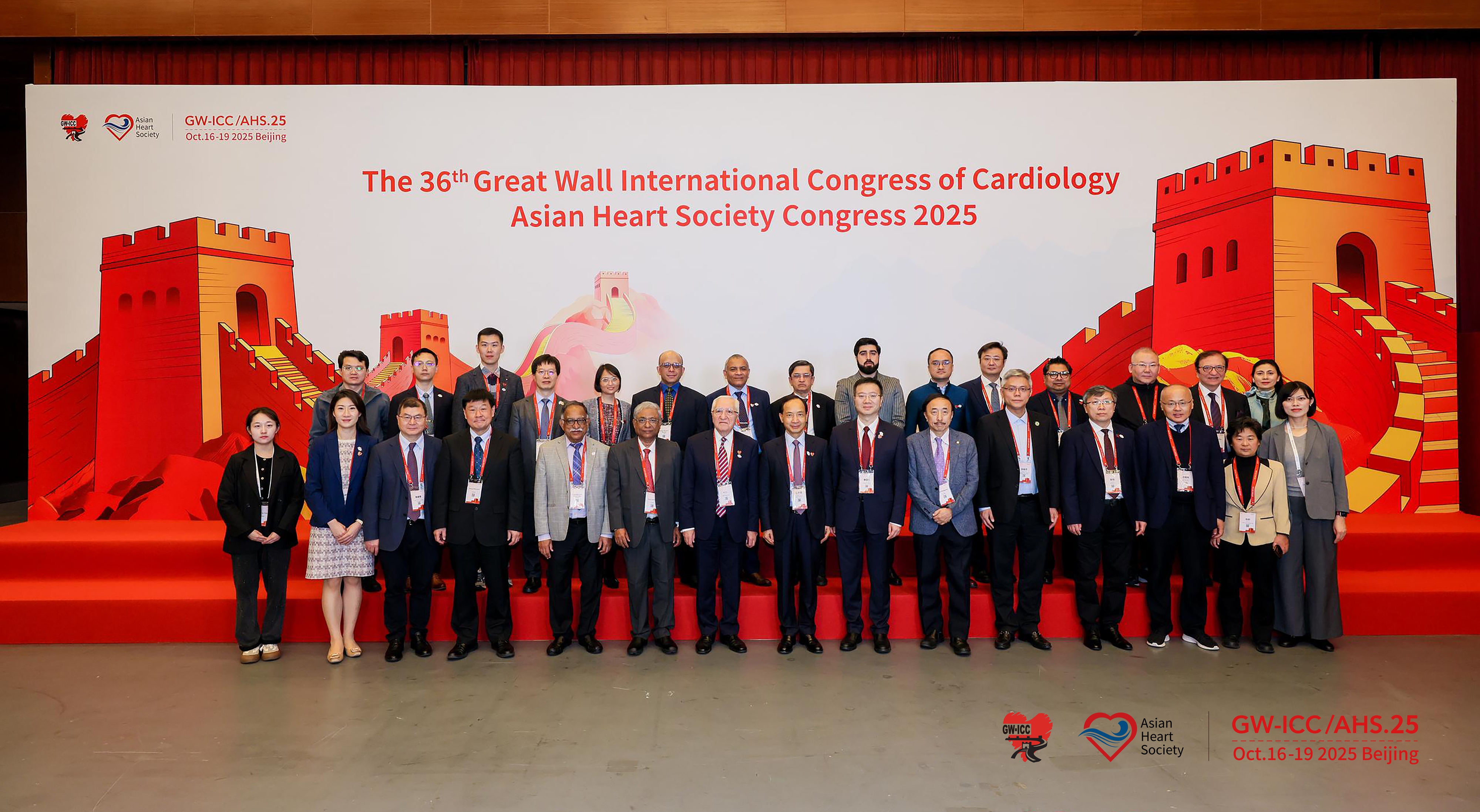
Group photo of the AHS members at the 36th Great Wall International Congress of Cardiology & Asian Heart Society Congress 2025.
III. Professional System Development and Collaborative Platform Construction
To deepen subspecialty development, AHS has established 8 core professional councils, covering the full spectrum of disciplines from basic research to clinical practice. Each council is led by top scholars from different countries, aiming to pool professional expertise and formulate clinical guidelines and consensuses tailored to the characteristics of Asian populations.
AHS Councils List:
• Interventional Cardiology Council
• Translational & Basic Cardiovascular Science Council
• Hypertension Council
• Arrhythmia & Electrophysiology Council
• Heart Failure Council
• Structural Heart Disease Council
• Cardiovascular Prevention Council
• Cardiovascular Surgery Council
• Cardiovascular Imaging
AHS operates around four strategic pillars: Education, Publication, Research, and Organization. It has successfully built two complementary and synergistic core platforms:

IV. Flagship Academic Events and Global Influence
AHS has established its significant position in the global cardiovascular field by creating flagship academic conferences with international influence.
As AHS's official annual academic conference, its scale and influence consistently rank first in Asia. The 2025 Congress was unprecedentedly successful, gathering 24,700 experts and representatives from 58 countries, with a total of 483 academic thematic sessions covering all areas of cardiovascular medicine. The conference attracted the active participation of over 30 top international academic organizations, including the American College of Cardiology (ACC), American Heart Association (AHA), European Society of Cardiology (ESC), and World Heart Federation (WHF). The congress content spanned 13 major disciplines and 38 specialized fields, featuring dedicated Asian forums focusing on high-prevalence issues in Asia such as coronary intervention, arrhythmia, heart failure, hypertension, and structural heart disease, presenting an academic feast showcasing the latest advancements in cardiovascular medicine to participants.

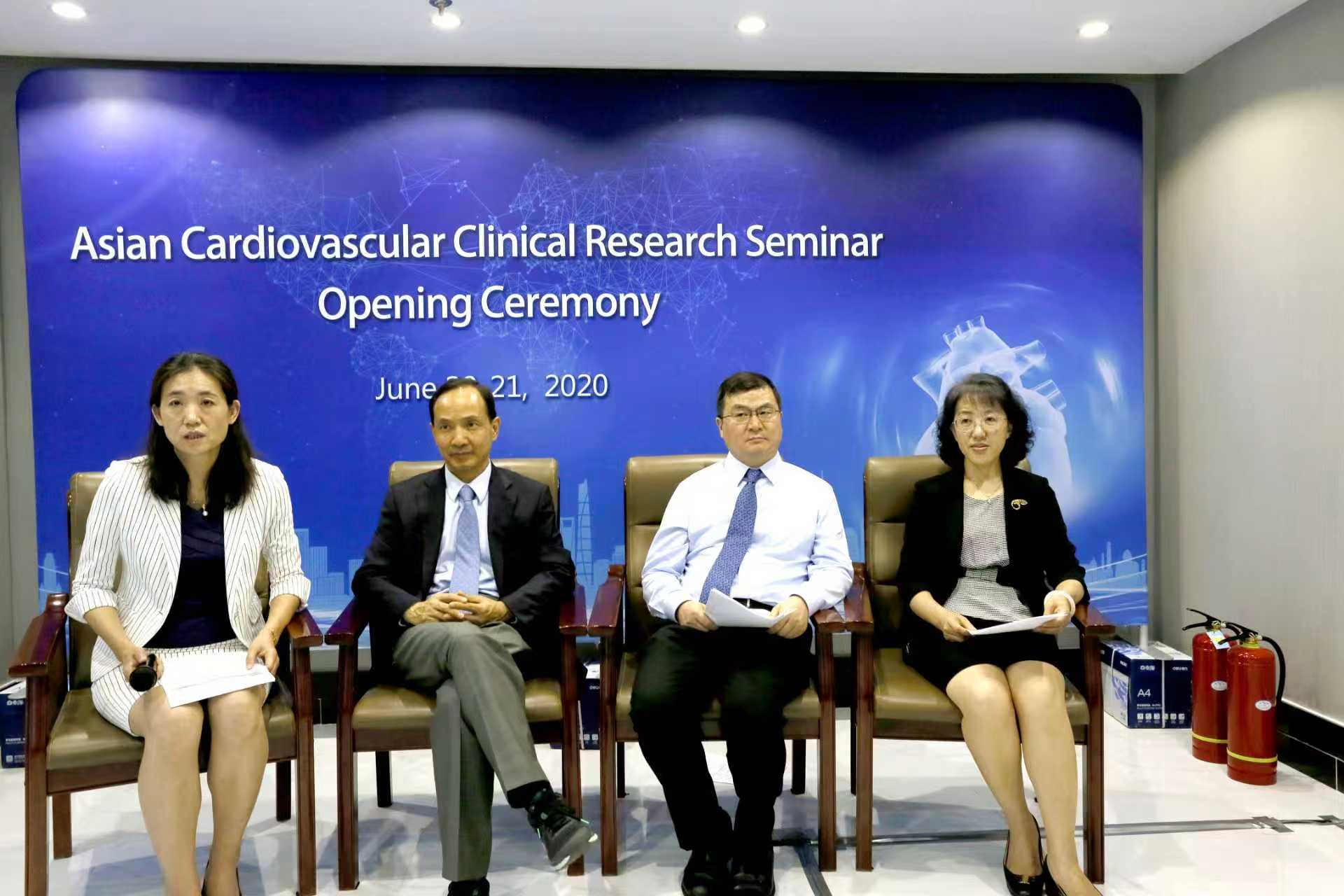 Held annually in June, ACCRS establishes professional forums based on AHS's eight councils, complemented by specialized training and technical workshops. It employs a combined online-offline, multi-venue linkage model. ACCRS is committed to actively cultivating outstanding medical talents, promoting the dissemination and innovation of medical knowledge, advocating for the adoption of the latest medical technologies and devices, systematically improving the diagnostic, treatment, and service quality standards of cardiologists in Asia, and ensuring patients benefit from the most advanced medical solutions.
Through these diverse, high-level academic exchange activities, AHS not only builds a professional dialogue platform but also focuses on advancing scientific research in Asia, actively supporting and encouraging local cardiology research projects, and striving to foster in-depth cooperation and exchanges with the international cardiology community.
V. Academic Publication System and Research Innovation Ecosystem
VI. Strategic Development Plan and Vision for Implementation in Hainan
Looking to the future, AHS has formulated a clear strategic development blueprint aimed at further strengthening its role as a core driver of cardiovascular health initiatives in Asia:
Systematic Expansion: Plan to establish additional professional committees for young physicians, nurses, and allied health professionals, develop a sound individual and corporate membership system, and build a hierarchical industry community covering the entire career cycle.
Physical Infrastructure Support: Plan to construct a "Heart House" headquarters that integrates international academic exchange, comprehensive training of multidisciplinary skills, simulation-based teaching, and administrative offices. This physical center will serve as an "Asian Base" for global cardiovascular professionals, providing world-class physical space and operational support for academic exchange, technology promotion, and industry collaboration.
Global Collaboration: AHS will engage more deeply in global health governance, strengthen cooperation with top organizations like the ACC, AHA, ESC, and WHF, and represent Asia's voice in international cardiovascular health affairs.
Establishing AHS's core functional bodies and the "Heart House" in Hainan is a key strategic step for the Society's development. The unique policy advantages, geographical conditions, and openness of the Hainan Free Trade Port align highly with AHS's needs for internationalization and high-quality development. This initiative will not only significantly enhance the efficiency of AHS in coordinating Asian affairs but also help position Hainan as an academic hub and industrial innovation nexus for cardiovascular health in Asia, creating a win-win situation and making important contributions to cardiovascular health causes in Asia and globally.